
Cook Our Family Feast
Learn how to plan and prepare a family recipe from scratch. This challenge helps you develop teamwork and practical cooking skills, leading to a delicious meal for everyone to enjoy.
Our goal: In this spark, your learner will collaborate to select and plan a family recipe, identify necessary ingredients and kitchen tools for a chosen dish and begin preparing a recipe, following step-by-step instructions.
What You Need
Recipe Book • Pen • Paper • Measuring Cups • Measuring Spoons • Mixing Bowl • Spoon • Water • pen/paper • measuring cups/spoons
and this is just the baseline.
Scan to jump into the app and easily personalize this Spark to match your child's exact learning level and see how Mai will guide this lesson.
Learning Guide
A simple guide to lead you through the kickoff, the core challenge, and everything in between.
Mai’s Tips
- Let the child choose the recipe, even if it seems a bit ambitious. You can always simplify tasks or step in as needed, but their ownership is key.
- Focus on the process, not just the perfect outcome. Spills and mistakes are learning opportunities! Encourage them to problem-solve.
1Introduction 5 min
Begin by welcoming your child to the family cooking challenge. Explain that you will be working together to plan and start preparing a special family recipe from scratch. Focus on making this a fun, collaborative experience.
What kind of food do you enjoy eating most?
Do you remember any special family dishes we've made or had before?
What do you think makes a meal 'homemade' instead of bought from a store?
Listen to their responses to gauge their interest and build excitement for the activity.
Done when the child expresses excitement or curiosity about cooking.
Done when: Student expresses excitement or curiosity about cooking.

2Explore & Plan 8 min
Work with your child to choose a recipe. You can browse a family cookbook, look for ideas online, or even recall a favorite dish from memory. Guide them towards a recipe that is suitable for their age and for which you have most of the necessary ingredients. As you look at recipes, discuss what "ingredients" and "kitchen tools" would be needed. An ingredient is a component of a mixture, like flour or eggs. A tool is an implement used to carry out a task, like a spoon or a bowl. We identify these to prepare properly.
What recipes sound fun to make today?
Which ingredients do you think we will need for this recipe?
What kitchen tools might we use to make it?
Help them write down the chosen recipe's name and key ingredients on paper with a pen.
Done when a recipe is chosen, and a basic list of ingredients and tools is identified.
Done when: A recipe is chosen, and a basic list of ingredients/tools is identified.

3Discussion 6 min
Review the chosen recipe together. Talk about the first few steps outlined in the recipe. Discuss how you can share the tasks. A "role" refers to the part someone plays in a project, like being the 'measurer' or 'stirrer.' A "responsibility" is a task you are in charge of completing. Assigning roles and responsibilities helps ensure everyone contributes and the work gets done efficiently. Emphasize kitchen "safety," which means taking precautions to prevent accidents, like an adult handling hot ovens or sharp knives.
Looking at our recipe, what do you think is the very first step we need to do?
Who wants to be in charge of washing the vegetables, or measuring the flour?
How can we make sure we are safe while cooking?
Done when the child can describe a few initial steps and suggests potential roles for themselves and you.
Done when: Student can articulate a few initial steps and their potential roles.
4Let's Get Cooking! 9 min
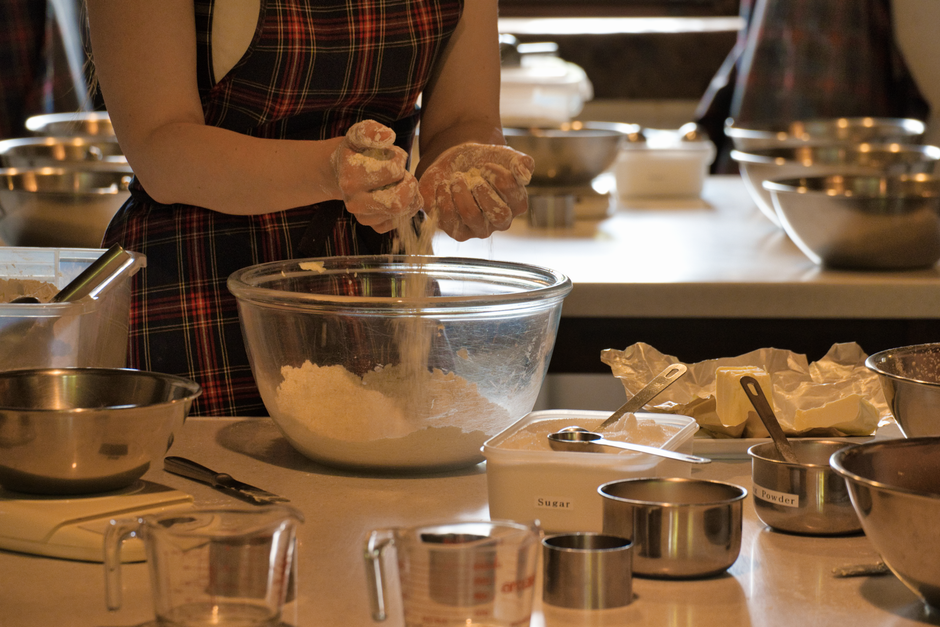
Gather all identified materials and ingredients on your workspace. Refer back to your chosen recipe and the plan you made in Stage 3. Guide your child through the initial preparation steps. For instance, have them wash produce with water, measure dry or liquid ingredients using measuring cups and measuring spoons, or mix ingredients in the mixing bowl with a spoon. Emphasize safety throughout, particularly with any tools or steps you handle. Encourage them to lead the process by calling out the next step from the recipe as you assist.
What's the very first action we need to take according to our recipe?
Can you help me measure out the sugar using this measuring cup?
What do you think will happen when we mix these two ingredients together?
Done when the initial steps of the recipe, such as ingredient prep, washing, measuring, or mixing the first few items, are completed.
Done when: Initial steps of the recipe (e.g., ingredient prep, mixing first few items) are completed.
5Summary 2 min
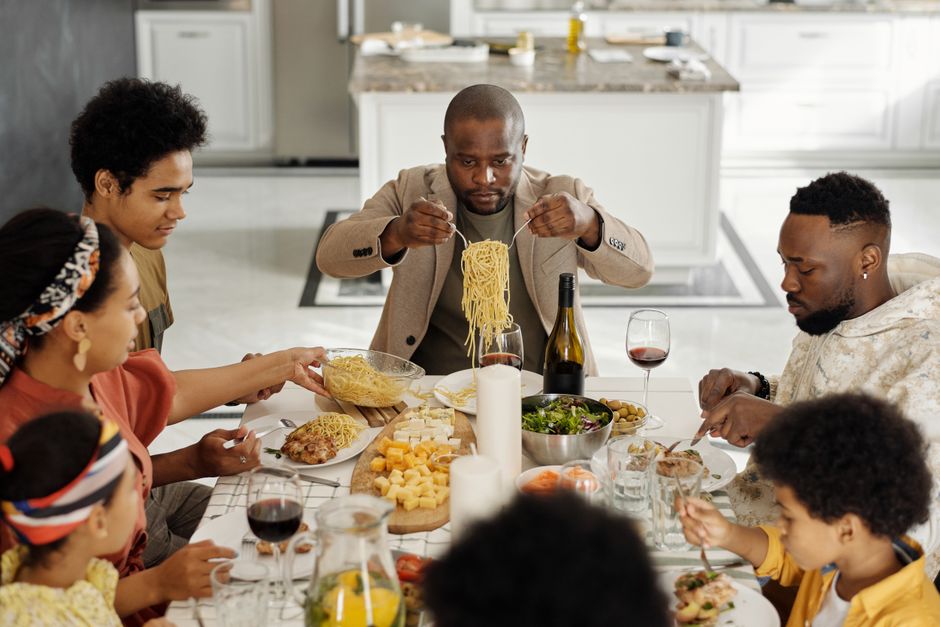
Reflect with your child on the cooking process. Acknowledge their effort and contributions, no matter how small. Talk about what went well and what might have been challenging. Discuss what the next steps would be to finish making the meal (e.g., "Now we'll put it in the oven," or "Tomorrow we'll finish mixing and cook it").
What was the most interesting part of getting our dish ready today?
What did you learn about how food is made?
What was easy for you, and what felt a bit challenging?
Done when the child shares at least one key learning or experience from the activity.
Done when: Student shares one key learning or experience from the activity.
Beyond The Spark
Fuel their curiosity beyond the Spark with bonus extras.
Table Talk
Chefs, food scientists, and even grocery store managers use planning and organization skills every day to bring delicious food to our tables.
Challenge
Design a new flavor variation for your recipe, by adding one new ingredient or spice! How would it change the taste?
Quick Recap Quiz 4 min
Customize this quiz, add questions, or follow your child's lead! Each question has a 'Parent Tip' to help them find the answer without giving it away.
1. The first step in cooking a new recipe is usually:
- Eating it
- Planning and gathering ingredients
Hint: Think about what you need before you can start cooking.
2. Why is teamwork important when cooking with family?
- So everyone can help and learn
- So one person does all the work
Hint: Sharing tasks often makes things more fun and efficient!
3. If a recipe asks for 1 cup of flour, what tool would you use?
- A small spoon
- A measuring cup
Hint: Precise amounts need special tools.
4. What soft skill did you use most during our cooking challenge?
- Creativity
- Napping
Hint: We chose a recipe, divided tasks, and thought about flavors!
Loved This Spark?
Scan to jump into the app and explore similar Sparks in our Sparks Hub. New to Mai? Start free with 10 Sparks, no credit card needed.