Circle Space Superpowers
Explore how different shapes enclose space using a fixed boundary. Children will discover that circles are surprisingly efficient at holding more 'park' within the same 'fence' length, comparing common shapes and uncovering the mathematical principle behind it.
Our goal: Learners will understand the difference between a shape's perimeter, which is its boundary, and its area, which is the space it holds inside. They will be able to predict how reshaping a boundary of fixed length changes the internal area. Ultimately, they will explain why certain shapes, like circles, are surprisingly efficient at enclosing more space than others.
What You Need
String • Paper • Pencil • Ruler • Scissors
and this is just the baseline.
Scan to jump into the app and easily personalize this Spark to match your child's exact learning level and see how Mai will guide this lesson.
Learning Guide
A simple guide to lead you through the kickoff, the core challenge, and everything in between.
Mai’s Tips
- Fixed Perimeter: The core of this Spark is keeping the string length constant. If the child changes the string's length, the comparison of areas becomes meaningless. Gently guide them back to using the exact same piece of string for all shapes.
- Visual Comparison: For younger children, the 'measurement' of area will be purely visual. Avoid getting bogged down in counting exact squares unless an older child initiates it. The key insight is the qualitative difference in space enclosed.
- Analogies: If the terms 'perimeter' and 'area' are confusing, use the 'fence' and 'park ground' analogy consistently. You can also talk about 'skinny' versus 'fat' shapes made with the same string to describe the distribution of space.
- Circles are Tricky: Forming a perfect circle with string can be difficult. Focus on getting a generally round shape. The point is the visual comparison, not geometric precision.
1Morning Shapes 5 min
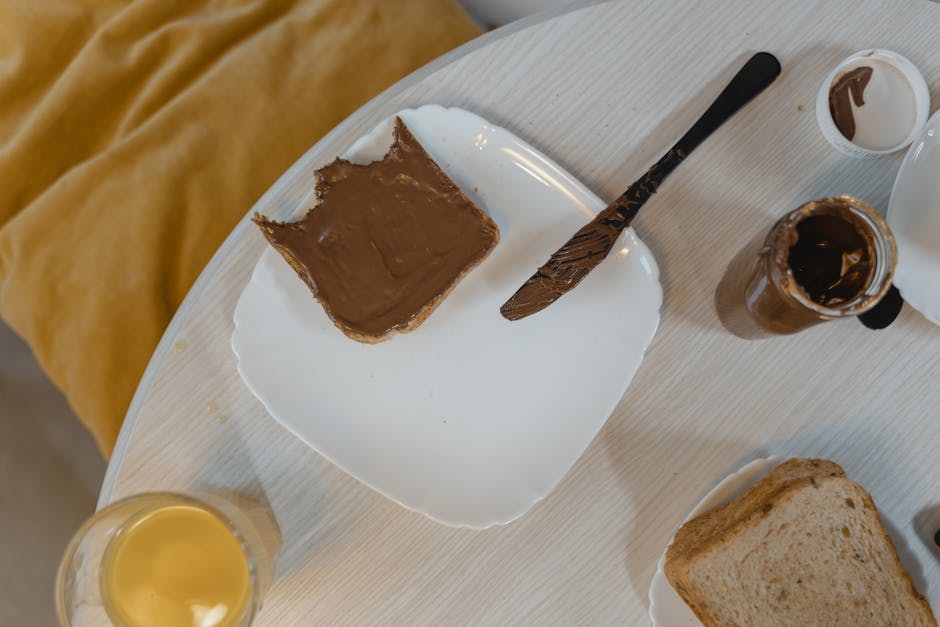
Engage your child with common breakfast items to introduce the concepts of 'edge' and 'inside space.' Have younger children point to and name shapes; older children can describe the properties of the shapes they see.
Know Before You Teach
- Good to know: Shapes are all around us.
- Objects have an outer edge and an inner surface.
- If they ask: What's my favorite shape? Everyone has a favorite! What do you like about it?
- Easier: Focus on identifying just one shape and pointing to its 'edge' and 'middle'.
- Harder: Ask them to compare two different shapes on the table (e.g., plate and napkin) and describe their edges and insides.
Done when: Child identifies at least two common shapes and can distinguish between their 'edge' and 'inside part' in their own words.
2Explore & Plan: The Park Challenge 8 min
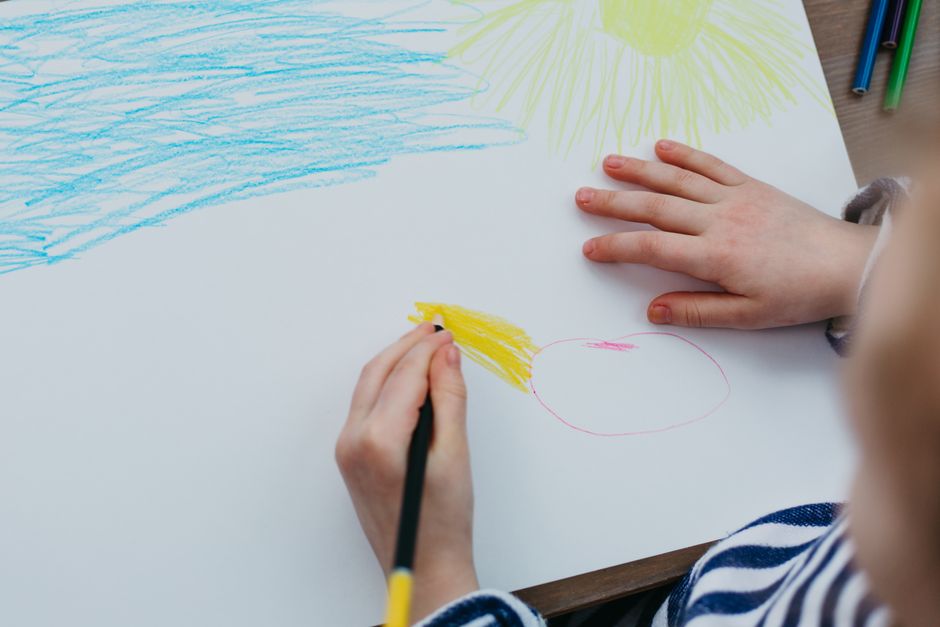
Introduce the 'park design' challenge. Have your child gather materials and make a prediction about which shape will hold the most space for a fixed 'fence' length. Ensure younger children grasp the idea of a fixed string length; older children can be asked to justify their prediction.
Know Before You Teach
- Good to know: The length of the 'fence' (string) must remain constant for fair comparison.
- This activity is about maximizing the space inside the fence.
- If they ask: Can I make the string longer? No, that's our challenge! We have to use just this much fence for every park idea.
- It's working when: Child understands the string length is fixed and makes a prediction about the best shape.
- Easier: Simply ask for one shape idea; don't press for justification.
- Harder: Ask them to draw multiple predicted shapes and explain their reasoning for each.
Done when: Child has a piece of string cut to length and has drawn their predicted 'best' shape for a park on paper.

3Unpacking Perimeter and Area 6 min
Clearly define 'perimeter' and 'area,' using concrete examples from the activity. Have the child apply these terms to their drawn shape. The goal is for them to understand these concepts, not just memorize definitions.
- Perimeter: The distance around the outside of a shape, like a fence. You measure it along the boundary.
- Area: The amount of flat surface inside a shape, like the ground of a park. You measure how much space it covers.
- Why: Perimeter is about the boundary; Area is about the space inside the boundary.
Know Before You Teach
- Easier: Focus on understanding just one term (e.g., perimeter is the 'fence') before introducing the other.
- Harder: Ask them to give their own examples of objects where they can identify the perimeter and area.
Done when: Child can point to the perimeter and area of a simple shape and describe each in their own words. They understand the goal is to maximize area with a fixed perimeter.

4Building the Shapes 9 min
Guide your child in using the string to form different shapes. Emphasize that the string length (perimeter) remains constant. Encourage visual comparison of the 'area' enclosed by each shape. Younger children can focus on making any recognizable shape; older children can try to make more precise squares or circles.
Know Before You Teach
- Good to know: Different shapes created with the same perimeter will have different areas.
- Visually, a circle appears to enclose more space than a rectangle or square of the same perimeter.
- If they ask: How do I make a perfect circle? Just try your best to make it round! The goal is to see which shape looks like it holds the most space.
- It's working when: Child actively forms and compares at least three different shapes with the string.
- Easier: Help them hold the string in shape, focusing on comparing only two very different shapes (e.g., long rectangle vs. circle).
- Harder: Challenge them to make a shape that holds the least amount of space with the string, and explain why.
Done when: Student has used the string to create at least three different shapes (e.g., skinny rectangle, square, circle) and observed their relative areas.
5The Park Secret Revealed 2 min
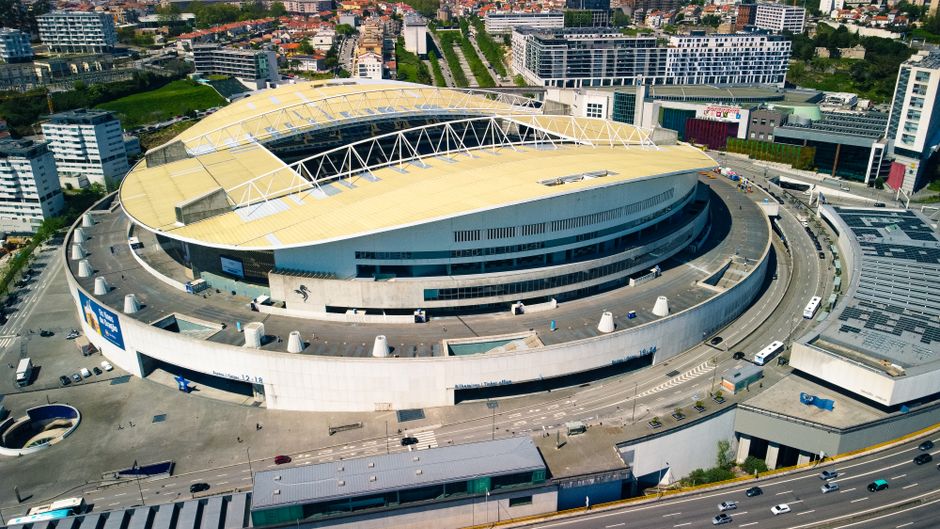
Encourage reflection on their observations. Confirm the core concept that a circle maximizes area for a given perimeter. Connect this to real-world examples. Celebrate their active discovery.
Know Before You Teach
- Good to know: This principle is used in real-world design.
- If they ask: Does this work for all shapes? Yes! A circle is always the champion for holding the most space inside for its boundary.
- It's working when: Child can articulate that the circle held the most space and can give a reason why.
- Easier: Accept a simple statement like 'the circle was biggest'.
- Harder: Ask them to think of other real-world objects that are round and why they might be designed that way.
Done when: Student shares their key observation about which shape held the most space and why.
Beyond The Spark
Fuel their curiosity beyond the Spark with bonus extras.
Table Talk
Architects and urban planners use these principles to design buildings, parks, and even cities to be as efficient as possible with space and materials.
Did You Know?
Did you know that a fence exactly 12 inches long could create a circular garden holding 11 square inches of plants, but a square garden made with the same 12-inch fence would only hold 9 square inches?
Challenge
Using the same string, try to make a triangle. How does its area compare to the other shapes you made? Can you find other shapes that hold very little space for their perimeter?
Quick Recap Quiz 4 min
Customize this quiz, add questions, or follow your child's lead! Each question has a 'Parent Tip' to help them find the answer without giving it away.
1. What does the 'fence' around your mini park represent in math?
- The area
- The perimeter
Remind them of the 'edge' or 'boundary' of the shape.
2. What does the 'park space' inside your fence represent?
- The area
- The perimeter
Recall what measures the flat surface covered by the shape.
3. If you have a fixed length of string, what shape holds the MOST space inside?
- A long, skinny rectangle
- A circle
Think back to which shape looked the biggest with the same fence.
4. Why might a water tower be built in a round shape?
- To hold the most water for its material
- Because circles are easier to build
Connect the 'most space for its boundary' idea to holding water.
Loved This Spark?
Scan to jump into the app and explore similar Sparks in our Sparks Hub. New to Mai? Start free with 10 Sparks, no credit card needed.