
Cereal Math Adventure!
Today, let's turn breakfast into a mathematical adventure! We'll explore how to make smart guesses about quantities and then use tools to find out the exact truth. Get ready to put your estimating skills to the test with your favorite cereal!
Our goal: Learners will understand the value of making smart guesses (estimations) before finding exact quantities. They will practice using various tools to accurately count and measure, then compare their initial estimates to the actual results.
What You Need
Cereal • Bowls • Spoons • Measuring Cups/Spoons
and this is just the baseline.
Scan to jump into the app and easily personalize this Spark to match your child's exact learning level and see how Mai will guide this lesson.
Learning Guide
A simple guide to lead you through the kickoff, the core challenge, and everything in between.
Mai’s Tips
- Focus on Process: The goal isn't a perfect estimate, but the thinking process behind making one. Encourage them to explain why they chose their initial guess, not just what their guess was.
- Scale the Tools: For younger children, using larger scoops (like a whole cup) makes the counting simpler. For older children, challenge them to use smaller measurements (like tablespoons) or to estimate by weight if you have a kitchen scale.
- Correcting Misconceptions: If a child's estimate is wildly off, resist the urge to correct them. Instead, ask 'What made you guess that?' or 'How could we get a closer guess next time?' to encourage reflection rather than just giving the answer.
- Mess Management: Cereal can get everywhere! Consider laying down a placemat or tray to contain any spills and make cleanup easier, especially for the pouring and measuring steps.
Prep Before Session 3 min
- Gather bowls, spoons, cereal, and a set of measuring cups and spoons on a clean surface.
1Introduction 5 min
Have everyone choose a bowl and a spoonful of cereal. Prompt them to just look at it for a moment. Younger children can focus on the shapes or colors. Older children can think about the sheer volume. Ask: 'Looking at your bowl, how much cereal do you think is in there? A little, a lot? How could we even begin to guess?' Younger child: points to cereal. Older child: might try to give a number or describe volume. Done when they've made an initial observation/guess.
Know Before You Teach
- Good to know: Kids often overestimate or underestimate quantities significantly, which is a natural part of learning to estimate.
- This stage is about engaging their curiosity and getting a baseline for their estimation skills.
- If they ask: Why do we need to guess? Can't we just measure? Sometimes you don't have a measuring tool, or you just need a quick idea! Like when you're deciding if there's enough time for a game before dinner.
- It's working when: Child actively looking at the cereal and making any kind of verbal or non-verbal guess about its quantity.
- If they're stuck: Suggest they compare their cereal to another common object, 'Is it more than an apple, or less?'
- Easier: Ask them to simply point to whether they think there's 'a lot' or 'a little' cereal.
- Harder: Ask them to quantify their guess by comparing it to a common unit, e.g., 'Is it more than one cup, or less?'
Done when: Student offers an initial thought about the cereal quantity.

2Explore & Plan 8 min
Lay out the measuring cups and spoons. Ask the child to pick up a few and describe them. Have them predict how many scoops of cereal from a specific measuring cup (e.g., 1/2 cup) would fill their bowl. Discuss what a 'smart guess' means. Younger child: chooses a measuring tool. Older child: estimates how many scoops of a specific size (e.g., 'about 4 half-cups'). Done when they have picked a tool and made a prediction about the quantity in their bowl using that tool.
Know Before You Teach
- Good to know: A 'smart guess' (estimation) uses prior knowledge or visual cues, not just randomness.
- Allowing them to choose tools gives them agency and ownership over the experiment.
- If they ask: Which measuring cup is the best one to use? That's a great question! What do you think would be easiest to count? Or which one looks like it would fill your bowl in the fewest tries?
- It's working when: Child engaging with the measuring tools, picking them up, and attempting to form a predictive statement.
- If they're stuck: Guide them by asking 'If you used this tiny spoon, would you need many or few? What about this big cup?'
- Easier: Just have them pick any measuring cup and make a very rough estimate (e.g., 'a few scoops').
- Harder: Challenge them to estimate how many different sized measuring cups (e.g., 1/2 cup AND 1/4 cup) would fill their bowl.
Done when: Student identifies a measuring tool and makes an estimated count or quantity for their cereal.
3Discussion 6 min
First, ask the child what they noticed about their guesses and the tools. Then, introduce Estimation.
What it is*: 'Estimation is making a close, smart guess about an amount or number, often without using exact tools.'
How to recognise it*: 'You're estimating when you look at something and make a thoughtful prediction, like guessing the number of cookies on a plate, instead of counting each one.'
Examples and contrast: 'Guessing how many grapes are left in the bunch is an estimate. Counting every single grape is not* an estimate. Guessing if you have enough milk for cereal is an estimate, but measuring exactly 1 cup for a recipe isn't.'
Why*: 'We estimate when we need a quick idea or can't measure perfectly, like checking if a bag of apples feels heavy enough to be a certain weight without a scale.'
Then, introduce Measurement.
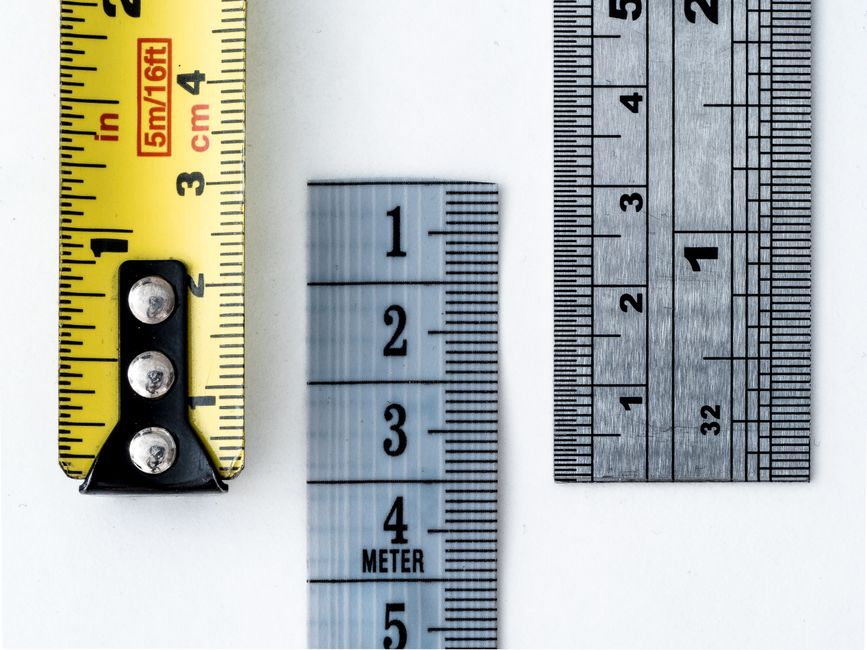
What it is*: 'Measurement is finding the exact size, amount, or extent of something using a standard tool or unit.'
How to recognise it*: 'You're measuring when you use a ruler, a measuring cup, or a scale to find a precise number, like finding out exactly how tall you are or how much flour is in a recipe.'
Examples and contrast: 'Using a measuring cup to get exactly half a cup of cereal is measurement. Just pouring some in and saying "that looks about right" is not* measurement, it's estimation.'
Why*: 'We measure when we need precision, consistency, or when following instructions, like baking a cake where the exact amount of ingredients matters.'
Ask: 'Now that you know about estimation and measurement, how are they different? When would it be more helpful to estimate instead of measure, or vice versa? Can you think of a time when you used estimation without even realizing it?' Younger child: can distinguish between 'a guess' and 'using the cup'. Older child: explains the difference and gives a new example. Done when they can explain the difference between estimation and measurement and give one new example of each.
Know Before You Teach
- Good to know: The key difference between estimation and measurement is precision and the use of tools for accuracy.
- If they're stuck: Give a concrete example: 'If we're baking cookies, do we estimate the flour or measure it? Why?'
- Easier: Focus only on the difference between 'guessing' and 'using a tool to be exact', using simpler language than 'estimation' and 'measurement'.
- Harder: Ask them to explain why precision matters in some situations (like baking) but not others (like guessing how many clouds are in the sky).
Done when: Student can define estimation and measurement in their own words and provide a new, unprompted example for each.

4Activity 9 min
Have the child pour their cereal out of the bowl and then use their chosen measuring tool (or several) to fill the bowl back up, counting each scoop. Emphasize careful counting and comparing the actual amount to their initial estimate. Younger child: focuses on pouring and counting scoops (e.g., '1 scoop, 2 scoops!'). Older child: measures precisely, records the exact amount, and calculates the difference from their estimate. Supervise to prevent excessive spilling or accidental ingestion of non-food items if substitutions were used. Done when they have measured the full amount of cereal in their bowl.
Know Before You Teach
- Good to know: This hands-on step solidifies the difference between estimate and actual, and provides a concrete example of measurement.
- Fine motor skills and careful counting are practiced here.
- If they ask: My estimate was really far off! Does that mean I'm bad at math? Absolutely not! It means you're learning how to make even smarter estimates next time. Scientists often make predictions that aren't perfect, and that's how they learn!
- If they're stuck: If struggling with counting, encourage them to sort into small piles first (e.g., piles of 5 scoops) then count the piles.
- Easier: Pre-fill the bowl with a known, easily countable number of scoops (e.g., exactly 3 half-cups) and have them confirm.
- Harder: Have them use two different measuring tools (e.g., first 1/2 cup, then switch to tablespoons for the remainder) and add the total.
Done when: Student has physically measured the cereal and determined its actual quantity.

5Summary 2 min
Encourage reflection on the activity. Ask: 'What surprised you most about your cereal? Was your estimate really close, or were you way off? Why do you think that happened? Where else do you see people estimating or measuring in real life?' Celebrate their effort and findings. Younger child: expresses whether their guess was 'big' or 'small' compared to the real amount. Older child: connects estimation/measurement to real-world scenarios beyond breakfast. Done when they can articulate one key takeaway from the activity.
Know Before You Teach
- Good to know: Reflection helps cement learning by connecting the activity to broader concepts and real-world application.
- Acknowledging their effort is crucial for building a positive learning mindset.
- If they ask: Why did we do this with cereal? Because math is everywhere, even in your breakfast bowl! It helps us understand the world around us better, and now you have a new way to think about amounts.
- It's working when: Child expressing any personal insight or connection, even if simple, about the concepts of estimation or measurement.
- If they're stuck: Revisit a concrete example from the activity: 'What was it like when you first guessed? And then when you used the cup?'
- Easier: Ask them if they prefer 'guessing' or 'using the cup' and why.
- Harder: Challenge them to think of a job or a hobby where estimation is more important than exact measurement, and vice-versa.
Done when: Student shares one key takeaway.
Beyond The Spark
Fuel their curiosity beyond the Spark with bonus extras.
Table Talk
From cooking to building to budgeting money, estimation and measurement help us plan, create, and understand the world around us.
Did You Know?
Did you know that the average box of cereal can contain over 10,000 individual pieces?
Challenge
Try estimating how many sips it will take to finish a glass of water, then actually count! Or estimate how many steps it takes to walk from one side of a room to the other.
Quick Recap Quiz 4 min
Customize this quiz, add questions, or follow your child's lead! Each question has a 'Parent Tip' to help them find the answer without giving it away.
1. What is a 'smart guess' about an amount without counting exactly?
- Measurement
- Estimation
Remind them of making a thoughtful prediction, not an exact count.
2. What do you call it when you use a tool, like a measuring cup, to find an exact amount?
- Measurement
- Estimation
Focus on the use of a tool for precision.
3. If you need to quickly decide if you have enough milk for your cereal, what skill are you most likely using?
- Measurement
- Estimation
Think about whether you need an exact amount or just 'enough'.
4. When following a recipe that says 'add 1 cup of flour,' what skill is most important?
- Measurement
- Estimation
Consider when exact amounts are crucial for success.
Loved This Spark?
Scan to jump into the app and explore similar Sparks in our Sparks Hub. New to Mai? Start free with 10 Sparks, no credit card needed.