
C's Secret Sounds
Explore the surprising world of letter sounds by making your own letter tiles! Discover why the letter 'C' has a secret life, making two different sounds depending on its neighbors, and use your new tiles to build all sorts of words.
Our goal: Learners will discover why the letter 'C' can make two different sounds and learn the special rule that tells them which sound to use. They will then apply this knowledge to build words using their own handmade letter tiles.
What You Need
Paper • Scissors • Marker • Breakfast food
and this is just the baseline.
Scan to jump into the app and easily personalize this Spark to match your child's exact learning level and see how Mai will guide this lesson.
Learning Guide
A simple guide to lead you through the kickoff, the core challenge, and everything in between.
Mai’s Tips
- Active Observation: The goal in Stage 3 is for the child to discover the pattern. Don't just tell them the rule; ask them to compare words like 'cat' and 'city' and see if they can notice what's different right after the 'C'. This encourages critical thinking over memorization.
- Overlooking 'Y': Children often remember 'e' and 'i' for soft 'C' but forget 'y'. When discussing the rule in Stage 3, make sure to explicitly include 'y' and give an example like 'cycle' or 'fancy' to cement it.
- Simplified Explanation: If the concept of 'soft C' and 'hard C' is confusing, simplify by saying, 'Sometimes 'C' acts like a /k/ and sometimes it acts like an /s/. It decides based on its neighbor.' Focus on the actual sounds rather than the labels if the labels are a barrier.
- Tile Durability: If you plan to reuse the letter tiles, consider using slightly thicker paper or laminating them after they're made. This extends their life for future word-building games.
1Breakfast Sounds 3 min
Point to an item on the breakfast table. Ask the child to identify it, sound it out, and guess the letters that make up its name. This gets them thinking about phonics in an everyday context.
Know Before You Teach
- Good to know: Words are made of sounds, and these sounds are represented by letters.
- Breaking words into individual sounds is called phonological awareness.
- If they ask: Why do some letters make different sounds? That's a fantastic question! We're going to explore that very idea today, especially with one special letter.
- Key words: Sound: The noise a letter or group of letters makes when you say a word.
- Key words: Letter: A symbol we use to write down a sound or sounds.
- It's working when: Child attempting to vocalize individual sounds or initial sounds of words.
- If they're stuck: Suggest a very simple, short word like 'toast' or 'milk' and model sounding it out very slowly.
- Easier: Focus only on the first sound of the breakfast item. 'What sound does 'banana' start with?'
- Harder: Ask them to count the sounds in the word and then count the letters. 'Why are there sometimes more letters than sounds, or vice-versa?'
Done when: Student identifies a breakfast food and attempts to spell it or identify its sounds.

2Explore & Plan: Our Letter Kit 7 min
Introduce the idea of making letter tiles. Ask the child if they think all letters always make the same sound. Then, have them gather paper, scissors, and a marker, and discuss how they'll create one tile for each letter of the alphabet.
Know Before You Teach
- Good to know: English has 26 letters but about 44 different sounds (phonemes).
- This mismatch means some letters have to make more than one sound, or multiple letters combine for one sound.
- It's working when: Child expresses curiosity or surprise at the idea of letters having multiple sounds.
- If they're stuck: Prompt them with a specific example: 'Does the 'a' in 'apple' sound the same as the 'a' in 'car'?'
- Easier: Focus on the physical task: 'Can you help me find the paper and scissors?'
- Harder: Ask them to list all the letters they think might have more than one sound, or any letters they know for sure only have one sound.
Done when: Materials are gathered, and the child has shared a prediction about letters and sounds.

3The Two Sides of 'C' 7 min
Discuss words where 'C' makes different sounds. Explain the rule for hard and soft 'C' (when followed by e, i, or y, it's soft /s/; otherwise, it's hard /k/). Offer clear examples and contrast them.
Know Before You Teach
- If they ask: Why did English borrow words from French? Long ago, after 1066, a group from France called the Normans conquered England. They brought their language and many words with them, which mixed with the English language that was already there!
- If they're stuck: Write down 'cat' and 'city' and ask them to slowly say the 'C' part of each word. Ask them to look closely at the letter after the 'C'.
- Harder: Ask them to explain why 'C' makes a soft sound in 'face' (the silent 'e' often softens the preceding consonant).
Done when: Student can identify soft and hard 'C' sounds in example words and articulate the rule for when 'C' makes an /s/ sound.

4Crafting Our Sound Tools 10 min
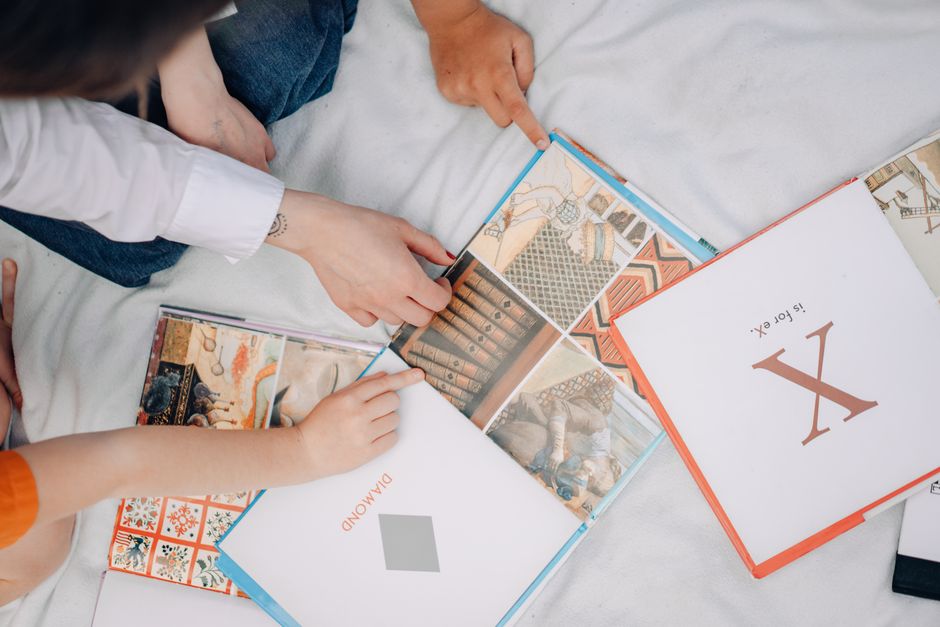
Guide the child in cutting paper into squares and writing one letter on each. Encourage them to make extra 'C' tiles. Then, challenge them to build words, focusing on using both hard and soft 'C' sounds.
Know Before You Teach
- Good to know: Having physical letter tiles helps children manipulate and experiment with word formation, reinforcing phonics rules.
- If they ask: Do I need to make all the letters? For now, let's try to make at least one of each letter, and definitely a few extra vowels and 'C's, so we have enough to build words easily!
- It's working when: Child enthusiastically creating letters and trying to build words.
- If they're stuck: Suggest simple CVC (consonant-vowel-consonant) words first, like 'cat', 'dog', 'sun'.
- Easier: Pre-cut the paper squares for younger children, or have them only write the letters, with an adult cutting.
Done when: Student has created a set of letter tiles, including several 'C' tiles, and has built at least three words, demonstrating the use of both hard and soft 'C' if possible.
5Our Word Workshop 3 min
Have the child share the words they built. Ask them to reflect on what they learned about the letter 'C' and how this knowledge helps them read and write. Reinforce their effort and discovery.
Know Before You Teach
- Good to know: Understanding phonics rules helps with both decoding (reading) and encoding (spelling) words.
- Reflection helps consolidate learning by connecting new knowledge to prior understanding.
- If they ask: What if I forget the 'C' rule? That's okay! We all forget things sometimes. The more you read and practice, the more naturally it will come. Plus, you can always look it up or remember our letter tiles!
- It's working when: Child can articulate at least one new piece of information they learned about letters or sounds.
- If they're stuck: Revisit one of the words they built in Stage 4 and ask them to explain the 'C' sound in it.
- Harder: Ask them to think of other letters that might have tricky sounds and propose a way to investigate them.
Done when: Student shares one key takeaway about letter sounds or the letter 'C'.
Beyond The Spark
Fuel their curiosity beyond the Spark with bonus extras.
Table Talk
Understanding how letters can have different sounds, like 'C', helps linguists study how languages change over time and how new words are absorbed.
Did You Know?
Did you know English borrowed over 10,000 words from French after the year 1066, which changed how many words were pronounced?
Challenge
Create a sorting game with your tiles: make two piles, one for words with a hard 'C' and one for words with a soft 'C'. Can you find any words that don't fit either category?
Quick Recap Quiz 4 min
Customize this quiz, add questions, or follow your child's lead! Each question has a 'Parent Tip' to help them find the answer without giving it away.
1. What sound does the letter 'C' usually make in the word 'cat'?
- /s/ sound (like in 'snake')
- /k/ sound (like in 'kite')
Remind them of words like 'car' or 'cup'.
2. When 'C' is followed by which letter does it often make an /s/ sound?
- e, i, or y
- a, o, or u
Think about 'city' or 'cent'.
3. Which word has a soft 'C' sound?
- Cookie
- Circle
Listen to the sound the 'C' makes and what letter comes after it.
4. Why does the letter 'C' have two different sounds in English?
- Because English borrowed words from other languages, like French.
- Because it's a very old letter and it got confused over time.
Think about how languages can change and mix over many years.
Loved This Spark?
Scan to jump into the app and explore similar Sparks in our Sparks Hub. New to Mai? Start free with 10 Sparks, no credit card needed.