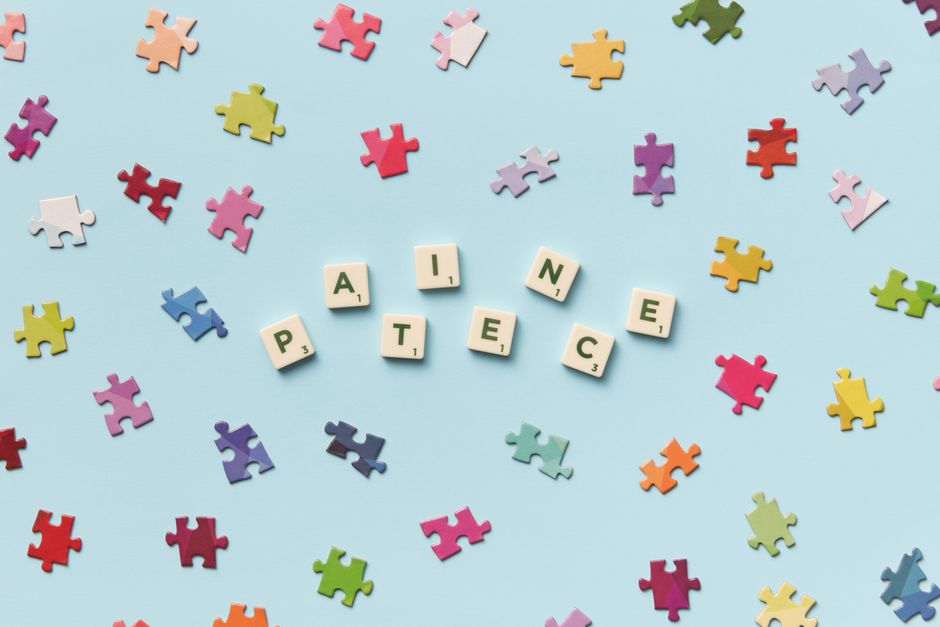
Build Word Treasure!
This hands-on challenge invites young learners to explore letter sounds by matching everyday objects to their starting letters. They will then use these sounds to 'build' simple words, creating a special word treasure. This activity fosters early literacy and phonological awareness.
Our goal: In this spark, your learner will identify the beginning sound of common objects, match objects to their corresponding first letter and arrange letters to form simple, familiar words.
What You Need
Small Household Objects • Letter Cards • Paper • Crayon
and this is just the baseline.
Scan to jump into the app and easily personalize this Spark to match your child's exact learning level and see how Mai will guide this lesson.
Learning Guide
A simple guide to lead you through the kickoff, the core challenge, and everything in between.
Mai’s Tips
- Don't worry about perfect spelling; the goal is to reinforce the sound-to-letter connection and foster phonological awareness. Praise effort and listening skills above all.
- If letter cards aren't readily available, simply write letters on small slips of paper or sticky notes. The physical manipulation of the letters is key for this age group.
Prep Before Session 15 min
- Gather 4-5 small household objects with clear beginning sounds (e.g., spoon, car, apple, block, toy dog).
1Introduction 5 min
Introduce the challenge with excitement, telling your child they will be building their own special word treasures today. Encourage their participation by asking, 'What do you think words are made of?' Listen carefully to their responses, validating their ideas. Explain that words are made of small sounds, just like buildings are made of bricks. This understanding, called phonological awareness, helps us hear and play with the sounds in words.
Done when your child shows engagement and excitement for the challenge.
Know Before You Teach
- Good to know: Phonological awareness is a key pre-reading skill that helps children understand that spoken words are made up of individual sounds.
- Engaging the child's own ideas first, even if incorrect, helps them feel valued and makes them more receptive to new information.
- If they ask: Where do sounds come from? Sounds come from our mouths when we talk, and they help us make words!
- It's working when: Child attempts to answer the question about what words are made of, even if their answer is simple or off-topic.
- If they're stuck: Offer a simple analogy: 'Words are like Lego creations, and the sounds are the individual bricks.'
- Easier: Instead of asking 'What do you think words are made of?', prompt them: 'Do you think words are made of big pieces or tiny pieces?'
- Harder: Ask, 'Can you think of a word that has a long sound and a word that has a short sound?'
Done when: Child shows understanding and excitement about the challenge.

2Explore & Plan 8 min
Gather 4-5 small, common household objects that have clear beginning sounds, such as a spoon, a car, an apple, a block, or a toy dog. Have your child pick up each object, one at a time. Guide them to say the name of the object aloud, stretching out the first sound. The beginning sound (or initial sound) is the very first sound you hear when you say a word, like 'sss' in 'spoon'. Ask them for each object: 'What's the very first sound you hear?'
Done when your child has explored a few objects and attempted to vocalize their first sounds.
Know Before You Teach
- Good to know: Exaggerating the initial sound (like 'sss' for spoon) helps a child isolate it, separating it from the rest of the word.
- Focusing on the beginning sound is often the easiest entry point for children into understanding individual sounds within words.
- If they ask: Why do I have to stretch the sound? It helps our ears really hear that first tiny sound, like zooming in on a picture!
- It's working when: Child mimics stretching out the sound when saying an object's name, even if the sound itself isn't perfectly isolated.
- If they're stuck: Model one object: 'This is a 'b-b-b-book'. Can you hear my 'b' sound?'
- Easier: Parent says the object name and the first sound, and the child just echoes the sound: 'This is a 'cup'. Ccc-cup. Can you say 'ccc'?'
- Harder: Ask the child to think of another word that starts with the same sound as the object: 'Spoon, sss... what else starts with 'sss'?'
Done when: Child has identified a few objects and attempted to vocalize their first sounds.

3Discussion 6 min
Encourage your child to vocalize the different beginning sounds they heard from the objects. Discuss some examples: 'Which object had a /s/ sound, like "ssssss"?' or 'How about a /b/ sound, like "b-b-b"?' Follow up by asking: 'Why do you think it's important to know the first sound of a word?' and 'Do all words start with a different sound, or can some start the same?' Guide them to understand that words are built from sounds, and some sounds can start many different words.
Done when your child can connect objects to their initial sounds and shows understanding that words are made of sounds.
Know Before You Teach
- Good to know: Reflecting on the activity helps solidify the learning and allows the child to articulate their understanding in their own words.
- Explicitly linking sound awareness to reading readiness helps set the stage for later literacy development.
- If they ask: Why are sounds important for reading? When we read, our eyes see letters, and our brain turns those letters into sounds, which then make words!
- If they're stuck: Re-visit an object from Step 2: 'Remember our 'car'? What was the first sound in 'c-c-c-car'?'
- Easier: Instead of asking open-ended questions, offer two choices: 'Do sounds help us read better, or play better?'
Done when: Student can connect objects to initial sounds and understands that words are made of sounds.

4Activity 9 min
Prepare your letter cards. You can use pre-written ones, or use paper and a crayon to write out individual letters like C, A, T, D, O, G, S, U, N on small slips of paper. Choose a few objects from your collection that can form a simple CVC word (Consonant-Vowel-Consonant), like 'Car', 'Apple', and 'Toy' to spell C-A-T. A letter is a written symbol that represents a sound. Guide your child to match the first sound of each object to its corresponding letter card. Then, have them arrange the letters in order on a flat surface to spell the word. As they build, encourage them to say the sounds: /c/, /a/, /t/. Remind them that small objects should not be put in their mouths.
Done when your child has successfully arranged letters to spell at least one simple word using objects as cues.
Know Before You Teach
- Good to know: A CVC (Consonant-Vowel-Consonant) word is the simplest structure for early readers, typically three letters where the vowel sound is short (e.g., c-a-t, d-o-g).
- Matching the sound (phoneme) to the letter (grapheme) is a critical step in developing decoding and encoding skills.
- Physically manipulating letters helps children concretely understand how sounds and letters combine to form words.
- If they ask: Why are some letters like 'C' and 'T' and some like 'A'? Some letters, like 'A', make a sound we can keep making (vowel), and some, like 'C' or 'T', are quick sounds (consonant) that stop the air.
- If they're stuck: Point to the first object and say its sound, then pick up the correct letter and place it: 'This is 'c-c-c-car'. This letter 'C' makes the 'c' sound!'
- Easier: Parent places the first letter; the child then finds and places the remaining two letters to complete the word.
- Harder: After spelling a CVC word, ask the child to change one letter to make a new word (e.g., change C-A-T to H-A-T or C-U-T).
Done when: Student has successfully arranged letters to spell at least one simple word using objects as cues.
5Summary 2 min
Praise your child's effort and discoveries, emphasizing what a great word detective and architect they were. Prompt their reflection by asking: 'How did it feel to put the sounds together to make a word?' and 'What was the most surprising thing you learned today about words?' Finish by discussing the importance of sounds: 'Why do you think knowing sounds helps us with reading and talking?'
Done when your child shares at least one key takeaway or a word they enjoyed building.
Know Before You Teach
- Good to know: Reinforcing the connection between sounds, letters, and words helps build confidence and motivation for future literacy learning.
- Acknowledging their effort, rather than just the outcome, encourages a growth mindset.
- If they ask: Are there other ways to make words? Yes, sometimes letters make different sounds depending on who they're next to, but today we learned about the most common ones!
- It's working when: Child volunteers an answer to one of the reflection questions without much prompting.
- If they're stuck: Start with your own reflection: 'I thought it was really cool how 'c-a-t' became the word 'cat'!'
- Easier: Ask a simple yes/no question: 'Was it fun to build words with sounds?'
- Harder: Challenge them to find another object in the room and identify its first sound, then suggest a letter that makes that sound.
Done when: Student shares one key takeaway or a word they enjoyed building.
Beyond The Spark
Fuel their curiosity beyond the Spark with bonus extras.
Table Talk
Knowing sounds helps authors write stories and helps us read signs, labels, and books everywhere we go!
Challenge
Can you build a word that has four letters using four different objects? Or, can you find an object for the middle sound of a word?
Quick Recap Quiz 4 min
Customize this quiz, add questions, or follow your child's lead! Each question has a 'Parent Tip' to help them find the answer without giving it away.
1. What does the word 'cat' start with?
- D
- C
Help your child sound out 'c-c-c-cat' and identify the first sound.
2. Which word starts with the /s/ sound?
- Sun
- Moon
Ask them to make the /s/ sound and then say both words to see which one matches.
3. If I put the first sounds of 'dog', 'owl', and 'goose' together, what word could I make?
- Cow
- DOG
Break it down: what's the first sound of dog? Owl? Goose? Now put those sounds together.
4. Why is it good to know the first sound of words?
- It helps us read words
- It helps us count
Remind them how sounds are like clues for reading.
Loved This Spark?
Scan to jump into the app and explore similar Sparks in our Sparks Hub. New to Mai? Start free with 10 Sparks, no credit card needed.