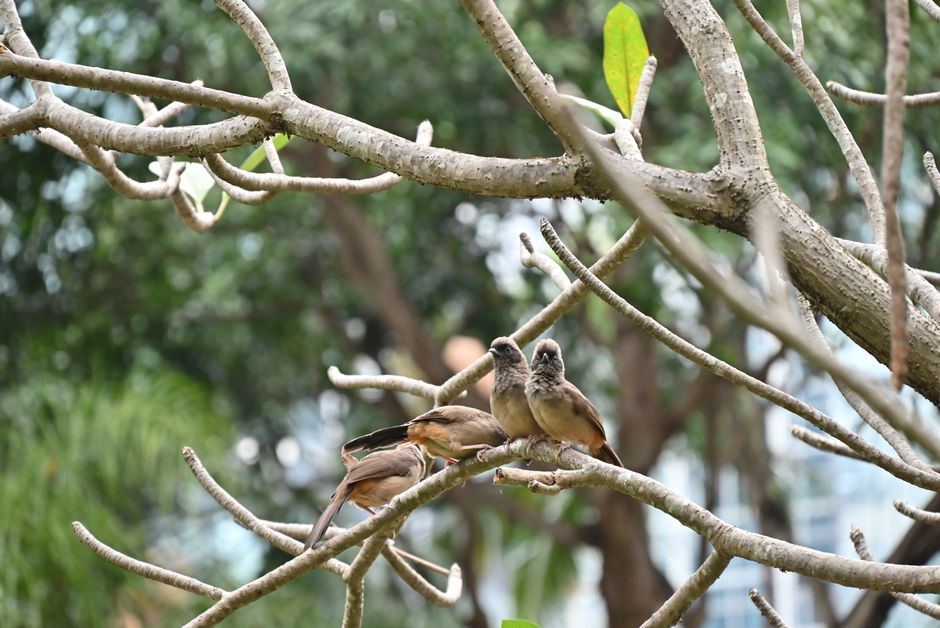
Birds' Epic Winter Journey
Explore the incredible distances birds travel to escape winter. Children will visualize and compare the migration routes of different birds, from a local robin to the amazing Arctic Tern, understanding the scale of these epic journeys.
Our goal: Learners will understand why birds migrate for winter and compare the incredible distances different species travel. They will also learn to visualize these vast journeys by using physical tools and scaling to grasp the true scale of bird migration.
What You Need
String • Measuring tape • Long paper • Markers
and this is just the baseline.
Scan to jump into the app and easily personalize this Spark to match your child's exact learning level and see how Mai will guide this lesson.
Learning Guide
A simple guide to lead you through the kickoff, the core challenge, and everything in between.
Mai’s Tips
- Scale selection: Help children choose a scale that is manageable but still illustrates the vast differences. For younger children, a very simple scale like 'one step = 100 miles' might work if using a long hallway. For older children, a more precise '1 inch = 100 miles' will allow for calculation practice.
- Misconception check: Children often assume all birds migrate similar distances. The sequential reveal of robin, duck, then tern directly addresses this, building surprise and wonder. Ensure they physically compare the lengths at each step.
- Simplify visualization: If precise measuring is too much, simplify to relative lengths. 'This much for the robin' (hold hands apart), 'this much longer for the duck' (stretch arms), 'and imagine this going all the way outside for the tern!' The key is understanding the difference in scale.
- Space considerations: The Arctic Tern's migration is so vast that its scaled representation will likely go beyond available paper or string. This is part of the lesson – highlight how truly immense that distance is, emphasizing it's hard to even fit into our space.
For The Grown-Up
- A common mix-up: Children often assume all birds fly relatively short, similar distances for winter, like just to a warmer state nearby, not realizing the global scale of some migrations.
- Try this: After introducing the robin's distance, ask them to make a guess for a duck or a different bird before revealing the actual number. The increasing scale of distances (robin, duck, tern) will naturally challenge their initial, smaller estimates.
- A big question to ask: If flying thousands of miles is so dangerous and tiring, why don't all birds just stay put and try to survive the winter where they are?
1Breakfast Table Journeys 5 min
Start by talking about journeys with items already on the breakfast table. This gently introduces the idea of travel before focusing on animals. Ask open-ended questions to get them thinking about movement and destinations. For younger children, focus on familiar trips; for older children, introduce the concept of where food comes from.
Know Before You Teach
- Good to know: Many common breakfast items, like coffee, fruit, or even grain for bread, travel long distances to reach our homes.
- Animals also travel, sometimes for food, shelter, or to raise their young.
- If they ask: Do all birds travel? No, some birds stay in one place all year, but many do travel long distances when the seasons change.
- It's working when: Child shows curiosity about where things or animals come from.
- If they're stuck: Ask about a pet's daily 'journey' (e.g., to its food bowl, to a sleeping spot) to make it more relatable.
- Easier: Focus on their own daily trips (home to park).
- Harder: Discuss trade routes or global food supply chains for older children.
Done when: Student engages in discussion about journeys and considers if animals travel.

2Explore & Plan Our Flight Path 8 min
Introduce the challenge of bird migration distances. Have the children guess how far birds fly. Then, brainstorm materials they could use to show these distances physically. Introduce the robin's migration distance to ground their predictions. Younger children can guess 'short' or 'long'; older children can try to estimate actual numbers.
Know Before You Teach
- Good to know: Robins are common backyard birds in North America and often migrate shorter distances (hundreds of miles) to find food.
- Visualizing large numbers can be challenging; physical representation helps build intuition.
- If they ask: How do birds know which way to go? Scientists think birds use the sun, stars, Earth's magnetic field, and even landmarks to find their way.
- It's working when: Child attempts to estimate or guess distances, even if wildly inaccurate.
- If they're stuck: Suggest thinking about a car trip they've taken – 'Would 200 miles be like driving to Grandma's or just around the block?'
- Easier: Just compare 'short' vs 'long' guesses without numbers.
- Harder: Ask older children to estimate how many hours it would take a bird to fly 200 miles at an average speed.
Done when: Student offers ideas for measuring/visualizing distance and makes a prediction for the robin's flight.

3The Meaning of Migration 6 min
Explain the concept of migration clearly. Migration is a regular, long-distance movement of animals from one region to another, usually in response to seasonal changes like food availability or breeding grounds. It's how animals find better conditions to survive. Use guiding questions to explore why animals migrate and how they might know where to go. Then, introduce the duck's journey and have them compare it.
Know Before You Teach
- Good to know: Migration is a significant energy expenditure for animals, usually undertaken when the benefits (food, breeding success) outweigh the costs.
- Ducks, like Mallards, can fly faster and further than robins, often migrating over a thousand miles between breeding and wintering grounds.
- If they ask: Can people migrate? Yes, people can also migrate, often moving for jobs, safety, or better living conditions, though it's usually not a regular seasonal trip like animal migration.
- Key words: Migration: A regular, long-distance journey animals take between different places, usually because of changing seasons, to find food, or to have babies.
- It's working when: Child connects migration to survival needs like food and warmth.
- If they're stuck: Ask: 'If there was no food in our fridge, where would we go to find some?'
- Easier: Focus on the simple idea: 'Birds fly away when it gets too cold here.'
- Harder: Discuss navigational challenges birds face during migration, like storms or predators.
Done when: Student can explain what migration is in their own words and understands the purpose behind it, and compares the duck's distance to the robin's.

4Mapping the Miles 9 min
Facilitate the hands-on activity of representing migration distances. Help children choose a scale (e.g., 1 inch = 100 miles) that works with your materials. Guide them to measure and cut string or mark paper for each bird. Younger children can focus on comparing lengths directly; older children can perform the scaling calculations. End by introducing the extraordinary Arctic Tern.
Know Before You Teach
- Good to know: The Arctic Tern has the longest migration of any animal, covering approximately 44,000 miles (70,900 km) annually, flying from the Arctic to the Antarctic and back.
- Key words: Scale: How model of something is related in size to the real thing (e.g., 1 inch on our paper represents 100 real miles).
- It's working when: Child actively participates in measuring and marking, showing understanding of which length is longer.
- If they're stuck: If struggling with scale math, provide pre-calculated lengths or use a simpler visual: 'This much string for the robin, now get a piece that's much, much longer for the duck, and a super-duper long one for the tern.'
- Easier: Focus on relative sizes: 'This one is small, this one is medium, this one is HUGE!'
- Harder: Have older children calculate the exact length of string needed for the Arctic Tern at the chosen scale, including unit conversions if necessary.
Done when: Student has physically represented and compared the migration distances of the robin, duck, and Arctic Tern.

5Reflecting on Remarkable Journeys 2 min
Conclude by having the children reflect on what they've discovered. Ask them to share their biggest surprises and connect the physical representation to the real-world feat of migration. Celebrate their ability to visualize such vast numbers. Younger children can simply point to the longest representation; older children can articulate the scale of difference.
Know Before You Teach
- Good to know: Their long migration allows them to exploit abundant food sources (fish, crustaceans) at both poles during their respective summers.
- If they ask: How do they not get tired? Birds are incredibly efficient flyers. They can often rest by gliding on air currents and have evolved bodies built for endurance, consuming lots of food before and during their journey.
- It's working when: Child expresses genuine awe or surprise about the distances or the birds' abilities.
- If they're stuck: Prompt with 'What was the biggest number you heard today?' or 'Which string surprised you the most?'
- Easier: Ask them to point to the 'champion flyer' on the paper.
- Harder: Discuss what a bird needs to survive such a long journey (food, rest, strong wings, good navigation).
Done when: Student shares one key takeaway about bird migration or the distances involved.
Beyond The Spark
Fuel their curiosity beyond the Spark with bonus extras.
Table Talk
Scientists track animal migration using GPS and satellite tags to understand their behaviors and protect their habitats.
Did You Know?
Did you know the Arctic Tern flies almost twice around the entire Earth every single year?
Challenge
Research another migratory animal (e.g., monarch butterfly, whale) and find out how far it travels. Then, try to represent its journey on your scale.
Quick Recap Quiz 4 min
Customize this quiz, add questions, or follow your child's lead! Each question has a 'Parent Tip' to help them find the answer without giving it away.
1. What is it called when birds fly long distances to find food or warmth?
- Vacation
- Migration
Remind them of the special word for animals moving seasonally.
2. Which bird flew the longest distance in our activity?
- Arctic Tern
- Robin
Ask them to remember which bird needed the longest string or paper.
3. Why do many birds fly south for the winter?
- To visit friends
- To find food and warmer weather
Prompt them to think about what changes in winter that birds need.
4. If a robin flies 200 miles and a duck flies 1,500 miles, which one flies further?
- The duck
- The robin
Ask them to compare the numbers and which is bigger.
Loved This Spark?
Scan to jump into the app and explore similar Sparks in our Sparks Hub. New to Mai? Start free with 10 Sparks, no credit card needed.