Alphabet's Secret Code
Explore the incredible power of the alphabet by creating words with paper letters. Discover how our 26 letters combine to form countless words, even with different sounds, challenging your family to see language in a whole new way.
Our goal: Learners will understand that all the words we use come from just 26 letters, even though those letters can make many different sounds. They will be able to experiment with various letter combinations to build and recognize new words.
What You Need
Paper • Pen or marker • Scissors
and this is just the baseline.
Scan to jump into the app and easily personalize this Spark to match your child's exact learning level and see how Mai will guide this lesson.
Learning Guide
A simple guide to lead you through the kickoff, the core challenge, and everything in between.
Mai’s Tips
- Guiding Discovery: The goal isn't for your child to know the answers instantly, but to actively explore and discover. Let them try to spell a word and make a 'mistake' – it's a chance to ask, 'What sound were you trying to make there?'
- Sound vs. Letter: The biggest conceptual hurdle is distinguishing between a letter's name and its sound(s). When they build 'CAT', emphasize the 'k-aaa-t' sounds, not just the names C-A-T. Prompt them to listen for the sounds as they assemble the letters.
- Simplifying: For younger learners, focus on just recognizing letters and building very simple, familiar words (like 'mom,' 'dad,' or 'go'). For older children, challenge them to build words with tricky spellings, silent letters, or multiple syllables, and to explain their choices.
- Embrace 'Wrong' Words: If a child builds something that isn't a real word, don't correct it immediately. Instead, ask them to 'read' their word. This helps them connect the letters to sounds and discover for themselves if it makes sense. It's a key part of active learning.
1Breakfast Table Words 5 min
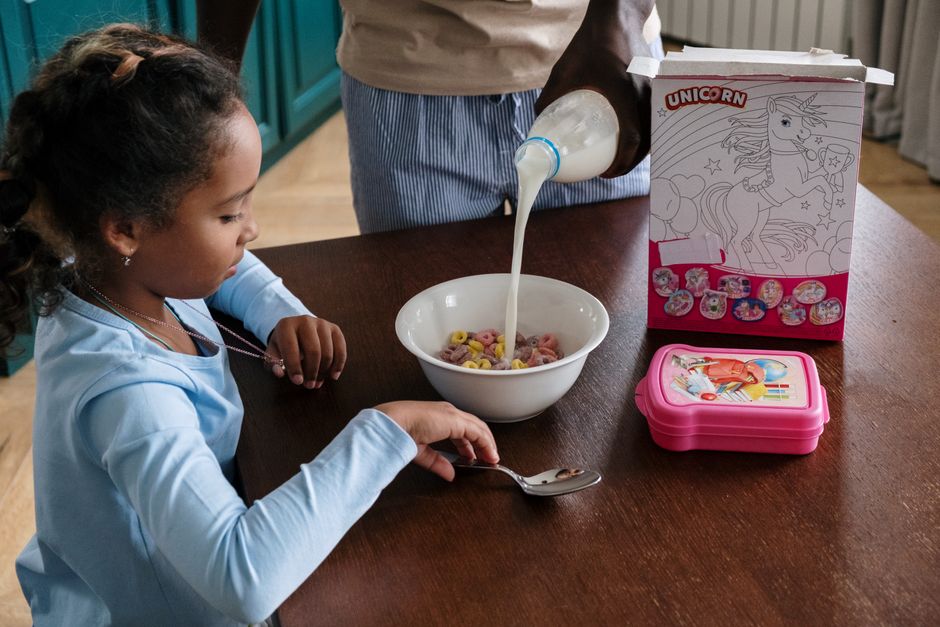
Have your child look at words on items around the breakfast table (e.g., cereal box, milk carton, a book). Have them point out words and count the letters. For younger children, let them just identify letters they know. For older children, ask them to spell out a word and count its letters. Once they've identified a couple of words, ask: - 'How many letters are in that word?' - 'Do you think these few letters are enough to make all the words in the world?' Done when the child has identified words and counted letters in at least one.
Know Before You Teach
- Good to know: This stage aims to get kids thinking about words as composed of individual letters, setting the stage for the alphabet's power.
- Starting with familiar objects grounds the abstract concept of 'words' in their everyday environment.
- If they ask: How many words are there? That's a fantastic question! No one knows exactly, but there are hundreds of thousands, maybe even millions, of words in the English language!
- It's working when: Child actively pointing to words or letters, showing recognition.
- If they're stuck: Point to a very simple word like 'milk' or 'toast' and ask them to find the 'M' or 'T'.
- Easier: Focus only on recognizing and naming individual letters they know on the packaging.
- Harder: Challenge them to find words with a specific number of letters, or words that rhyme.
Done when: Student identifies at least two words and counts the letters in one of them.

2Explore & Plan: Our Letter Toolkit 8 min
Discuss the alphabet. Ask: - 'How many letters do you think are in the alphabet?' - 'Do you think each letter always makes the same sound?' Then, guide your child to create their own alphabet letter tiles. They should write each letter of the alphabet (A-Z) on small pieces of paper and cut them out. Encourage making several copies of common vowels (A, E, I, O, U) and consonants (like R, S, T). Done when they have a full set of paper letters.
Know Before You Teach
- Good to know: There are exactly 26 letters in the English alphabet (A-Z).
- The act of physically creating letter tiles is a multisensory way to engage with the alphabet.
- If they ask: Why do we need so many letters? Every letter is like a special ingredient. The more ingredients you have, the more different dishes you can make! These 26 letters let us make an incredible number of words.
- Key words: alphabet: the set of all the letters we use to write words
- It's working when: Child correctly naming letters while writing them, or carefully cutting out their tiles.
- If they're stuck: Provide a pre-written alphabet for them to trace or cut out, rather than writing from memory.
- Easier: Pre-write the letters on paper and have them just cut them out, or just focus on making uppercase letters.
- Harder: Have them write both uppercase and lowercase versions of each letter, and make multiple copies of common letters (vowels, S, T, R, N).
Done when: Student has a complete set of paper alphabet letters cut out and ready to use.

3Discussion: Letters and Sounds 6 min
The core concept here is that the 26 letters of the English alphabet produce about 44 distinct sounds (phonemes), allowing for a vast vocabulary. A letter's sound often changes depending on other letters around it. Explain this simply: - 'We have 26 letters, but they can make about 44 different sounds! That's how we make so many words!' Then, ask: - 'Can you think of a word where the letter 'A' makes a different sound than it does in 'apple' (like in 'ate' or 'car')?' - 'How do letters combine to make sounds that aren't just the letters by themselves, like 'sh' in 'ship'?' - 'Why do you think it's useful that letters can make different sounds?' Done when the child understands letters can have multiple sounds and gives an example.
Know Before You Teach
- Good to know: This letter-sound inconsistency is a key reason why English spelling can be complex but also allows for a vast vocabulary.
- Examples: 'a' in 'cat' (short a) vs. 'ate' (long a); 'c' in 'cat' (hard c) vs. 'cent' (soft c); 'th' (voiced vs. unvoiced).
- If they ask: Why do letters make different sounds? Great question! It's because our language has grown and changed over hundreds of years, borrowing words and sounds from other languages. Sometimes, the way a letter sounds depends on the letters next to it.
- Key words: sound: the noise a letter or group of letters makes when we say a word
- Key words: phoneme: the smallest unit of sound in a language (optional for older kids, not for younger)
- It's working when: Child attempting to sound out words with different letter sounds, showing curiosity about the variations.
- If they're stuck: Give them two words (e.g., 'car' and 'cent') and ask them to listen closely to how the starting sound of 'C' changes.
- Easier: Focus only on two examples of a single vowel making different sounds (e.g., 'a' in 'cat' vs. 'ate').
- Harder: Discuss digraphs (two letters making one sound like 'sh', 'ch', 'th') or silent letters (like 'k' in 'knife').
Done when: Student can provide an example of a letter making different sounds in different words and understands that letters combine to make sounds.

4Activity: Building a Word Universe 9 min
Have the child use their paper letter tiles to build words. Younger children can start with their name, simple three-letter words (cat, dog), or familiar words. Older children can try longer words, words with silent letters (knife, hour), or words using the same letter with different sounds. Encourage playful exploration. Ensure safe use of scissors if any cutting remains. - 'What word can you build right now?' - 'If you swap one letter, what new word could you create?' - 'How many words do you think a person knows by the time they are your age?' Done when the child has built at least three distinct words.
Know Before You Teach
- Good to know: The ability to combine and re-combine a limited set of elements (letters) to create a vast number of outcomes (words) is fundamental to language.
- This hands-on activity reinforces letter recognition, sound-symbol correspondence, and basic spelling skills.
- If they ask: What if I can't think of any more words? Try spelling words from things you see around you, or names of friends and family. Or, pick three letters and see what words you can make with just those!
- It's working when: Child experimenting with letter arrangements, not just trying to spell known words.
- If they're stuck: Suggest building words related to a theme, like 'animals' or 'food,' or provide the first letter of a word they know to start them off.
- Easier: Provide a short list of simple CVC words for them to copy and build.
- Harder: Challenge them to build the longest word they can, or to create a sentence using their built words.
Done when: Student has successfully built at least three different words using their paper letters.

5Summary: The Power of 26 2 min
Congratulate your child on their word-building skills. Reflect on the activity and the main idea. Ask: - 'What was the most surprising thing about letters or words you discovered today?' - 'Why is it so powerful to have only 26 letters to make so many words?' Reiterate that English has over 170,000 words from just 26 letters, and even a 12-year-old knows around 50,000 words. Done when the child can share one new insight.
Know Before You Teach
- Good to know: An average 12-year-old knows around 50,000 words, demonstrating the rapid acquisition of vocabulary through exposure and application of phonetic rules.
- This stage connects the hands-on activity to the broader concept of language mastery.
- If they ask: Do other languages have 26 letters? Some do, but many have more or fewer! For example, some languages have characters that represent whole ideas instead of just sounds.
- It's working when: Child articulating a personal realization or connecting the activity to their own reading/writing experiences.
- If they're stuck: Remind them of the 'chameleon letters' from the discussion stage and ask how that helped them build words.
- Easier: Ask them to simply name their favorite word they built and why they liked it.
- Harder: Ask them to imagine what it would be like if every single word needed its own unique symbol, instead of just 26 letters.
Done when: Student shares one key takeaway about letters, sounds, or words.
Beyond The Spark
Fuel their curiosity beyond the Spark with bonus extras.
Table Talk
Professional writers, editors, and linguists spend their careers exploring the vast possibilities of these 26 letters to communicate complex ideas and stories.
Did You Know?
A 12-year-old knows about 50,000 words!
Challenge
Create a 'secret code' by assigning a different sound or symbol to some of your letters, and then write a message in your code for someone else to decode!
Quick Recap Quiz 4 min
Customize this quiz, add questions, or follow your child's lead! Each question has a 'Parent Tip' to help them find the answer without giving it away.
1. How many letters are in the English alphabet?
- Over 100
- Exactly 26
Remind them to count the letters they wrote down.
2. Can one letter make different sounds?
- Yes, like in 'cat' and 'cent'
- No, each letter has only one sound
Think about the letter 'C' or 'A' in different words.
3. What helps us make so many words with few letters?
- Each word needs a brand new letter
- Letters combine and make different sounds
Focus on how letters are used, not just how many there are.
4. Why is it important to know that letters can make different sounds?
- It helps us read and spell more words.
- It makes words harder to learn.
Consider how understanding sounds helps with reading new words.
Loved This Spark?
Scan to jump into the app and explore similar Sparks in our Sparks Hub. New to Mai? Start free with 10 Sparks, no credit card needed.